
Industrial vehicles, like forklifts, material handling equipment, and commercial fleet platforms, are overwhelmingly built around 12V electrical systems. But the accessories, sensors, and control systems that make those vehicles smarter increasingly run on 24V. Bridging that gap reliably, in a package that can survive the vibration, moisture, and temperature swings of a warehouse or factory floor, is a harder problem than it looks.
Bolting on an off-the-shelf converter and leaving the integration to the customer creates its own problems: mismatched connectors, untested switching behavior, and control logic that lives outside the enclosure where it can be damaged or disturbed. The customer needed a single, self-contained solution - one that handled conversion, switching, and status indication in a sealed package ready to drop into their vehicle platform.
What Ball Systems Built
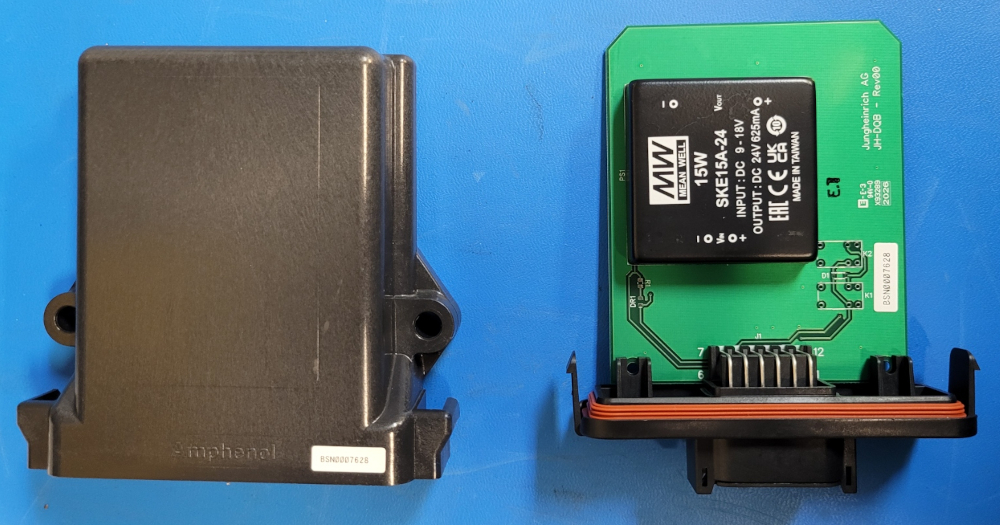
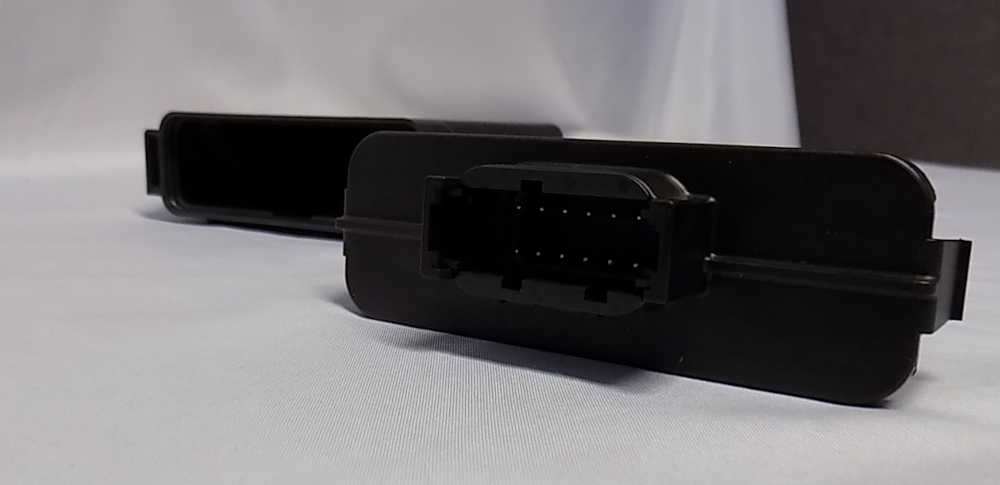
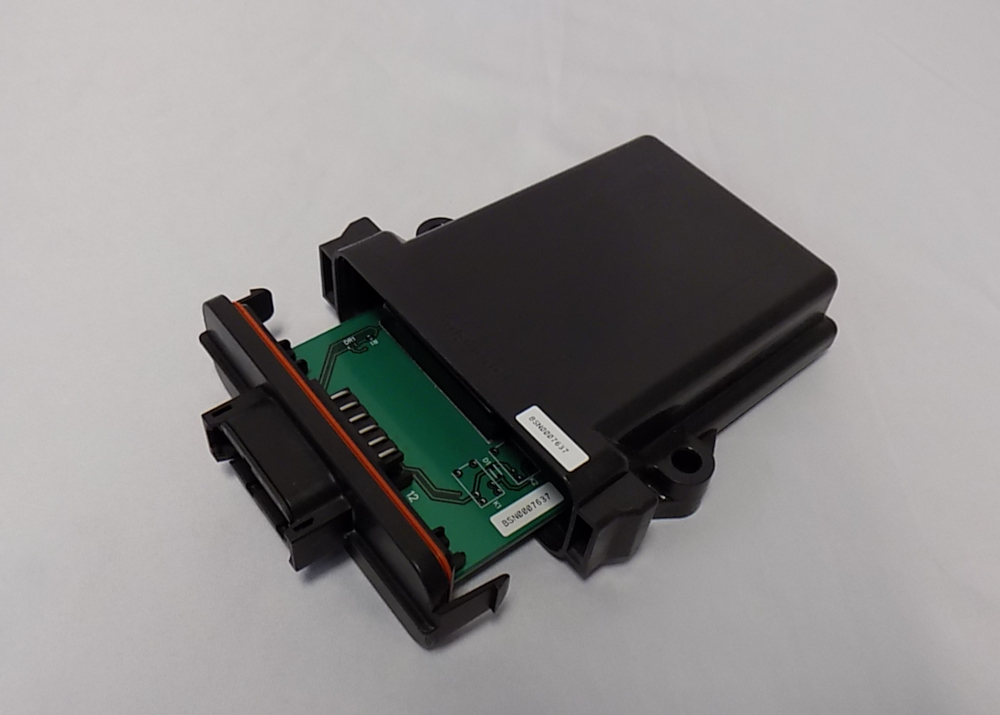
Ball Systems designed and built a compact conversion module that integrates everything the customer needed into one enclosed unit: an isolated DC-DC converter stepping 12V input to a stable 24V output, relay control circuitry for load switching and signal routing, LED status indication for field diagnostics, and sealed Amphenol Deutsch connectors for the vehicle harness interface.
The electrical heart of the assembly is a custom two-layer control board, the JH-DQB, designed specifically for this application. Rather than adapting a general-purpose layout, the board was sized and routed to fit the enclosure footprint, with separate power and signal paths keeping high-current relay switching isolated from the control logic. The mixed through-hole and SMD population reflects deliberate component choices: robust through-hole terminations where current demands it, compact SMD placement where space is tight.
Isolation between the 12V input and 24V output is not just a performance feature — it's a reliability one. In vehicle environments, ground loops and electrical noise from motors and solenoids are constant. An isolated converter topology protects downstream electronics from that noise, giving the customer confidence that the module will behave cleanly across the full range of vehicle operating conditions.
|
|
|
Why It Comes Together as One Assembly
The decision to consolidate conversion, switching, indication, and connectivity into a single sealed module was deliberate. Each function that lives outside the enclosure is a potential failure point in a mobile equipment environment, whether that's a loose connector, an exposed relay, or a status LED mounted away from the unit and forgotten. Packaging everything together eliminates that integration risk and gives the customer a unit they can mount, plug in, and trust.
Amphenol Deutsch connectors were the right choice for the vehicle harness interface. They're the automotive and industrial standard for a reason: positive locking, sealed against moisture and contamination, and built to hold up under the constant vibration of a vehicle in operation.
The customer gets field-proven connectivity without having to specify it separately.
What This Project Demonstrates
This module is a good example of what Ball Systems does when a customer brings a complete requirement rather than just a part number. The build spanned PCB fabrication coordination, mixed-technology assembly, and both electronics and electrification testing — all under one roof, with full traceability from board to shipped unit.

Ball Systems creates, develops, and delivers custom test systems and produces comprehensive build-to-print systems for companies that craft or manufacture critical electronic or electromechanical components for aerospace and defense, automotive, and consumer appliance applications.