
A Tier-1 aerospace OEM needed a precision cable assembly for a fuselage-mounted system on a wide-body commercial aircraft program. The cable had to terminate in a 10-position MIL-spec circular connector on one end, route shielded and signal-rated wire through tightly toleranced length segments, and arrive with full documentation proving every dimension, label, and material met the customer's drawing — all on a 6-week build cycle from order to ship.
Tolerances on a project like this aren't a formality. Each insulation and connector segment is dimensioned and inspected against a defined tolerance band, because a fuselage-mounted assembly has to fit, route, and seal exactly as the engineering drawing intends, every time, on every airframe.
How Ball Systems Builds It
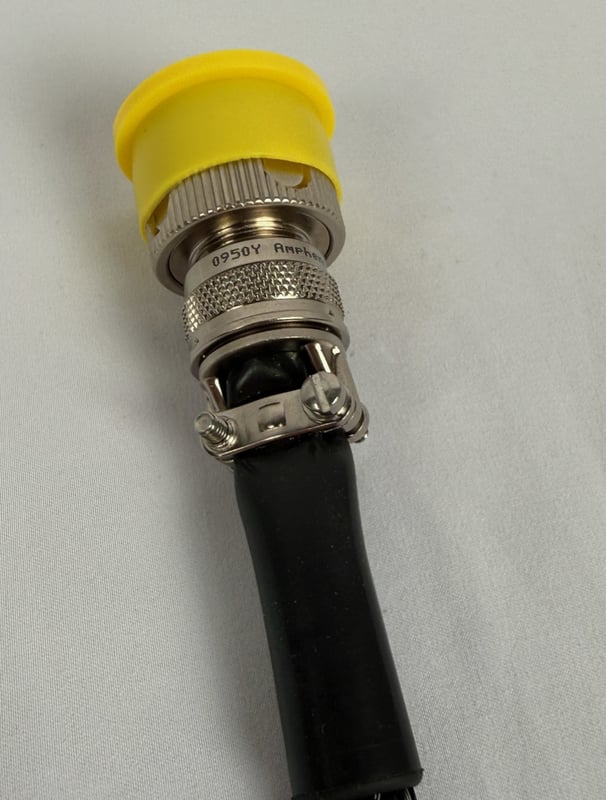
This is build-to-print work in its purest form: Ball Systems doesn't design the circuit; we execute the customer's engineering package with zero deviation and full accountability for every component in the bill of materials.
Quality You Can Trace Back to the Source
Every build in this product family runs through Ball Systems' standard aerospace quality gate before it ships:
That documentation package travels with the part. If a question ever comes up six months or six years from now, Ball Systems can trace that exact serial number back to the exact wire spool, connector lot, and inspector who signed off on it.
Why It Matters: The Bigger Picture
A cable assembly looks simple on a parts list — a connector, some wire, a label. In an aerospace fuselage application, it's anything but. It's the physical link between a critical system and the rest of the aircraft, and it has to perform that role under vibration, temperature swings, and decades of service life without a single connection coming loose or a single label fading past legibility.

Ball Systems creates, develops, and delivers custom test systems and produces comprehensive build-to-print systems for companies that craft or manufacture critical electronic or electromechanical components for aerospace and defense, automotive, and consumer appliance applications.