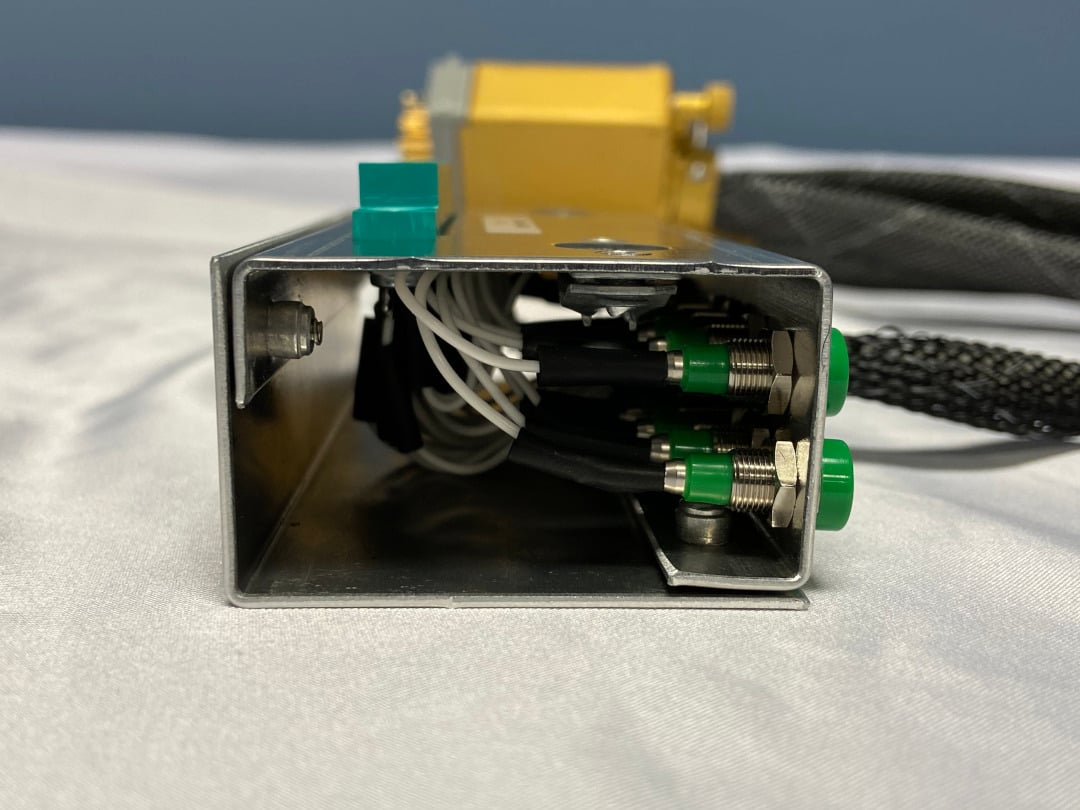
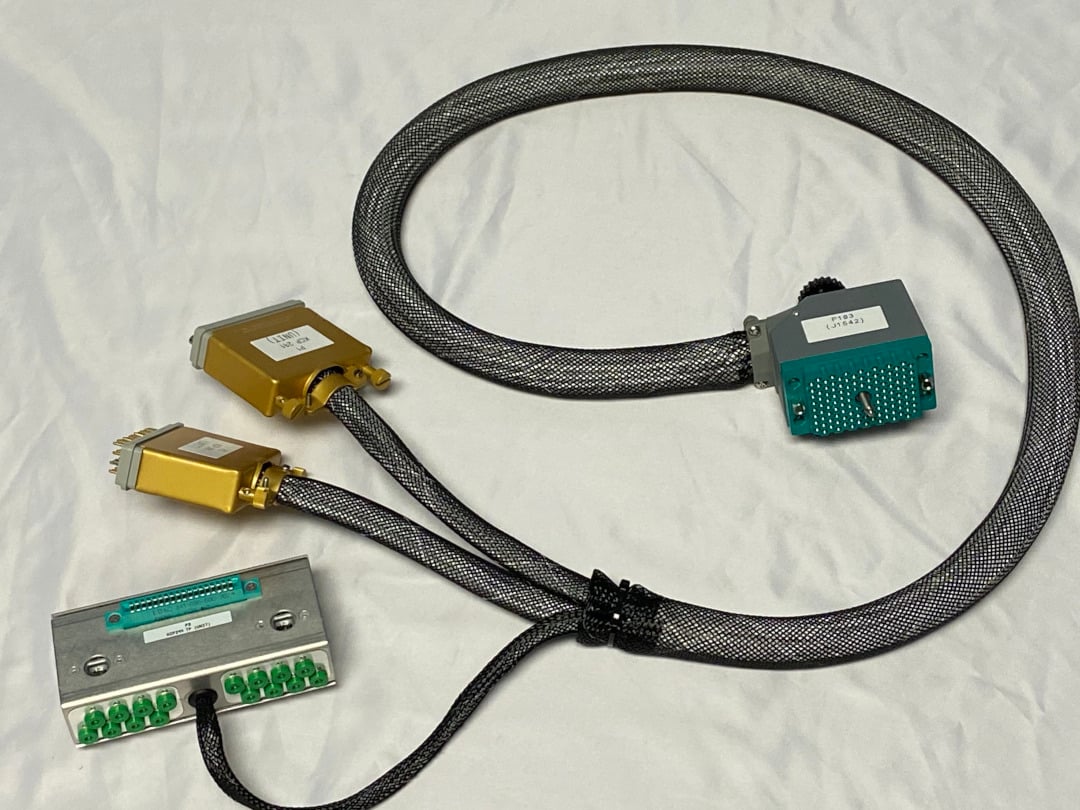
We provided a custom test unit harness designed to connect avionics components to ground support equipment for accurate diagnostics and calibration. The harness improved testing efficiency and reduced turnaround time.

|
|
|
Purpose-built, this wiring assembly connects an avionics unit, including a flight computer, nav system, comm radio, engine controller, flight recorder, or similar line-replaceable unit, to the test equipment that verifies it's working correctly. It breaks out the unit's connectors (often circular MIL-spec, ARINC, or program-specific) and routes power, control signals, digital bus traffic, and analog I/O between the device under test and whatever tester is driving it: a benchtop test set, a flight-line suitcase tester, a production-floor cabinet, or a depot-level validation rig.
Functionally, a good harness does four things at once. It maps pinouts correctly so every signal lands where the test software expects it. It preserves signal integrity—proper shielding, correct wire gauge, controlled impedance where it matters—so the tester is measuring the avionics box, not noise from a bad cable. It handles the mechanical reality of test use, including getting plugged and unplugged thousands of times without wearing out, and the connectors have to seat cleanly every time. And it gives the operator a repeatable interface, often with labeled breakouts, keyed connectors, and strain relief that keeps a distracted technician from miswiring a unit under test.

Ball Systems creates, develops, and delivers custom test systems and produces comprehensive build-to-print systems for companies that craft or manufacture critical electronic or electromechanical components for aerospace and defense, automotive, and consumer appliance applications.