Ground support equipment doesn't get the spotlight that flight hardware does, but nothing leaves the ramp without it. GSE testers let a maintenance crew confirm that a component is good before it ever goes back on the aircraft. Building one of these testers means Ball Systems has to be a printed circuit board house, a precision panel builder, and a systems integrator all at once, on a single job. This project is a good example of what that looks like end-to-end.
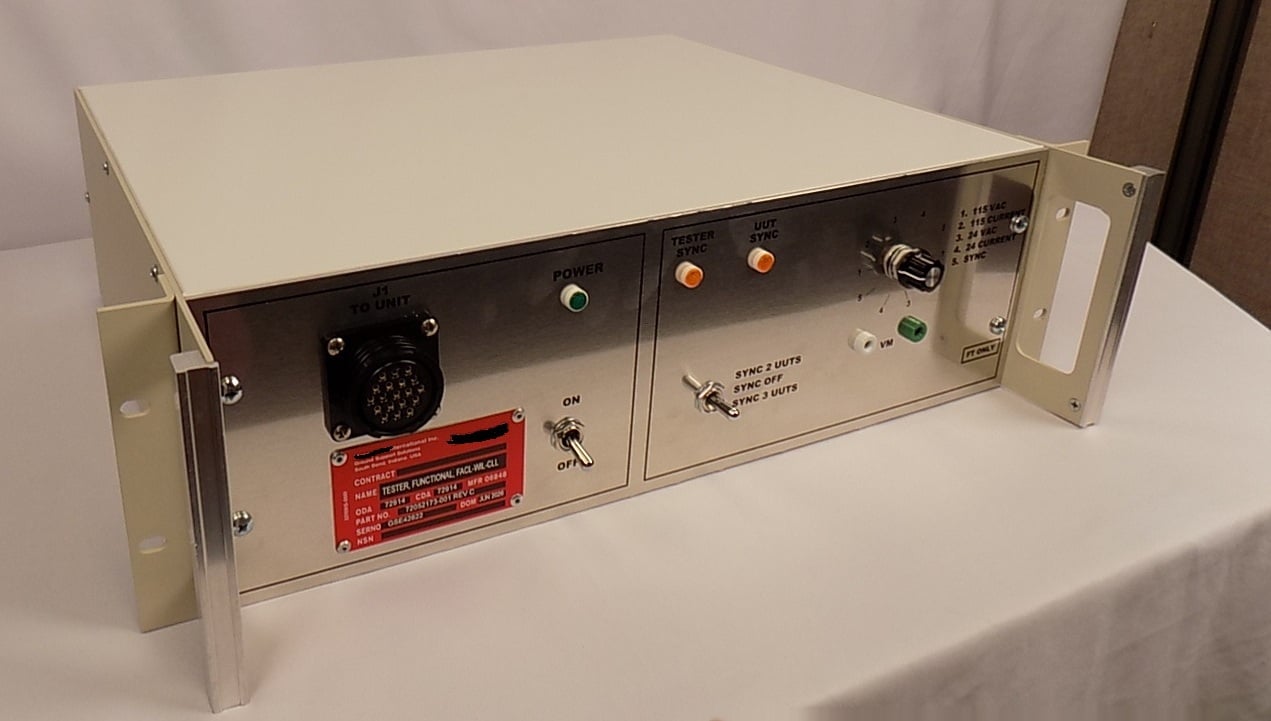
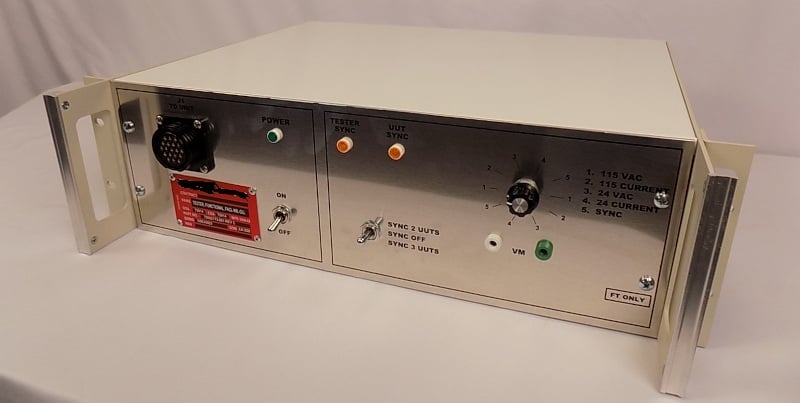
An aerospace and defense customer needed a dedicated functional test system to validate a specific line-replaceable component before it shipped or was returned to service. Rather than adapting a generic test rig, the program called for a purpose-built tester: custom circuit boards to generate and capture the right signals, a front panel laid out for a technician to run a repeatable test sequence, and the ruggedness to live on a test bench for years of reuse. As a repeat build off a proven Rev-C design, the tester also had to be reproducible exactly the same way, unit after unit, with full documentation behind every part on the BOM.
The tester's core electronics live on two custom circuit boards designed specifically for this application: a sync circuit board that times and coordinates the test sequence, and a capture-and-hold board that latches signal readings for the technician to evaluate. Ball Systems manages the full path from bare-board fabrication, sourced through a certified, ITAR-registered PCB manufacturing partner, through precision PCB assembly (PCBA) in-house, so the boards that go into the tester are built and tested to the same standard as the system around them.
|
|
|
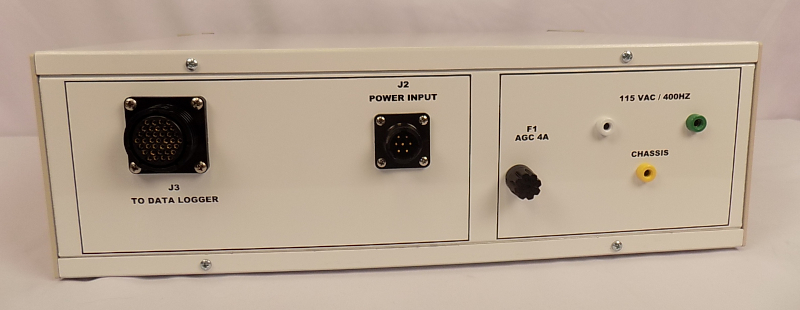
Around those boards, the tester is a fully custom electromechanical build: panel-mount rotary and toggle switches, indicator LEDs, banana jacks and binding posts for probing test points, terminal blocks, a step-down transformer, fused power protection, and a machined enclosure modified to the program's exact panel layout. Every connector, fastener, and wire, down to the crimp contacts and Teflon-insulated hookup wire, is selected and built to a documented bill of materials, so the finished tester matches its engineering print exactly, every time it's built.
Because this tester needed to be repeatable across multiple builds, Ball Systems tracks it the way we track every build-to-print program: material class, sourcing, and cost data tied to each component; assembly labor logged by task; and inbound material verified against the approved parts list before it reaches the bench. That discipline is what enables a customer to reorder the same tester years later and get the exact same performance.
A functional tester is never really a standalone product. It exists to validate a specific piece of fielded or flight hardware, which means it has to be engineered with that hardware's interfaces, tolerances, and failure modes in mind. Ball Systems' Build-to-Print, Design Engineering, and Test Services teams work from the same playbook on projects like this: understand the system the tester supports, then build the test equipment to match it, not the other way around.
That's also why custom test equipment work at Ball Systems rarely stops at one unit. A functional tester built for a GSE program today is the same tester a customer reorders for a second test bench, a training program, or a spares pool tomorrow, and Ball Systems' documentation-first approach to build-to-print manufacturing is what makes that repeat order painless.

Ball Systems creates, develops, and delivers custom test systems and produces comprehensive build-to-print systems for companies that craft or manufacture critical electronic or electromechanical components for aerospace and defense, automotive, and consumer appliance applications.