
In aerospace ground support, the cable connecting a mechanic’s diagnostic workstation to an aircraft’s engine is not a commodity. It is a traceable, inspected, documented component. A maintenance technician depends on these cables to retrieve accurate fault codes, read live sensor data, and clear an aircraft for service. Get it wrong and the consequences ripple outward. Get it right, consistently and repeatedly, and it disappears into the background the way reliable things should – and do.
That is what Ball Systems builds. DMM-PC interface cables are a recurring build for Ball Systems in the aerospace and defense sector, and they represent something the company has practiced for six decades: taking a customer’s drawing package and returning a finished, tested, traceable assembly that meets specification without drama.
|
|
|
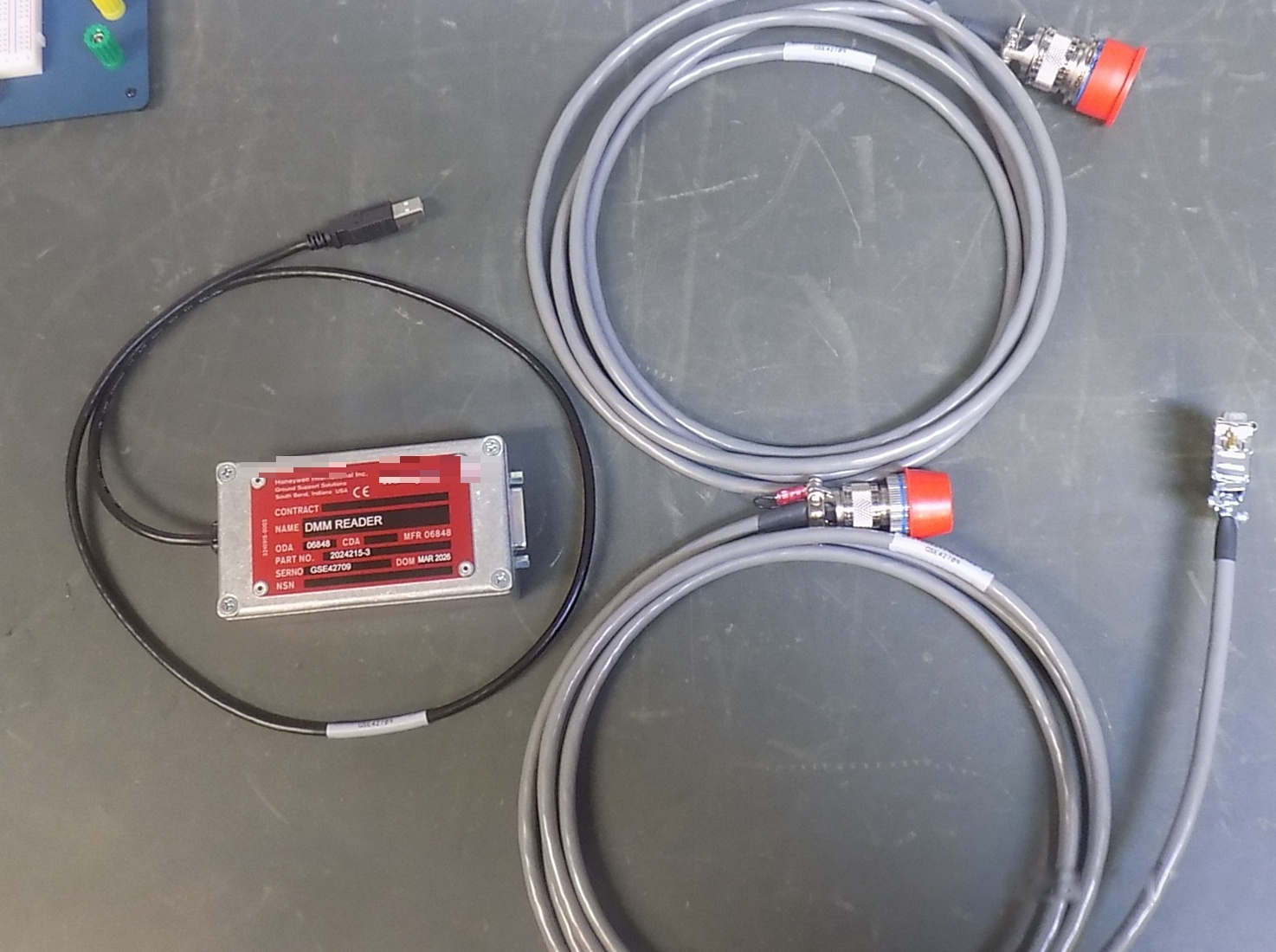
A Tier-1 aerospace and defense manufacturer needed a reliable, repeatable cable harness and a DMM-PC interface to connect a mechanic’s diagnostic workstation to an aircraft’s engine and on-board systems.
The goal was straightforward: to give maintenance technicians a trusted, traceable means of retrieving fault codes, reading sensor data, and validating system behavior without pulling hardware off the airframe.
Every dimension, every wire gauge, and every label placement was fixed by the customer’s engineering drawings. Ball Systems’ job was to read those drawings accurately, source to specification, build without deviation, and document everything.
Ball Systems has fulfilled repeated orders of this assembly across multiple job runs.
Every unit has left Ball Systems’ facility with a clean mechanical inspection record: correct assembly details, scratch-free surfaces, proper labeling, signed off and dated by quality control.
Ball Systems is ITAR-registered. Customer technical data and finished assemblies are handled accordingly, with access limited to authorized personnel and documentation retained as required.
The cable assembly draws on materials selected for the realities of an aviation ramp environment. The wire stock was specified for its wide operating temperature range, resistance to aviation fluids and hydraulic contaminants, and excellent dielectric properties in high-frequency signal environments.
Ball Systems procures materials through established supplier relationships built over decades of building test equipment for demanding industries. On a build-to-print program, this matters: the customer’s drawings specify materials, and Ball Systems’ sourcing network exists to find those materials at quality, on schedule, and without substitutions that could compromise form or fit.
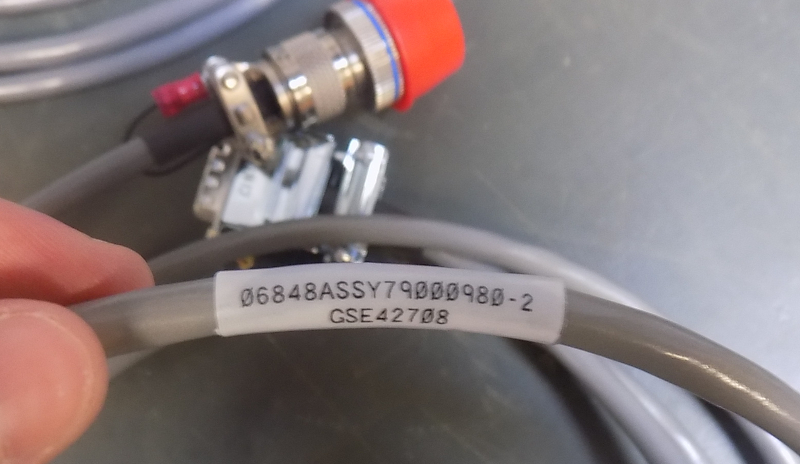
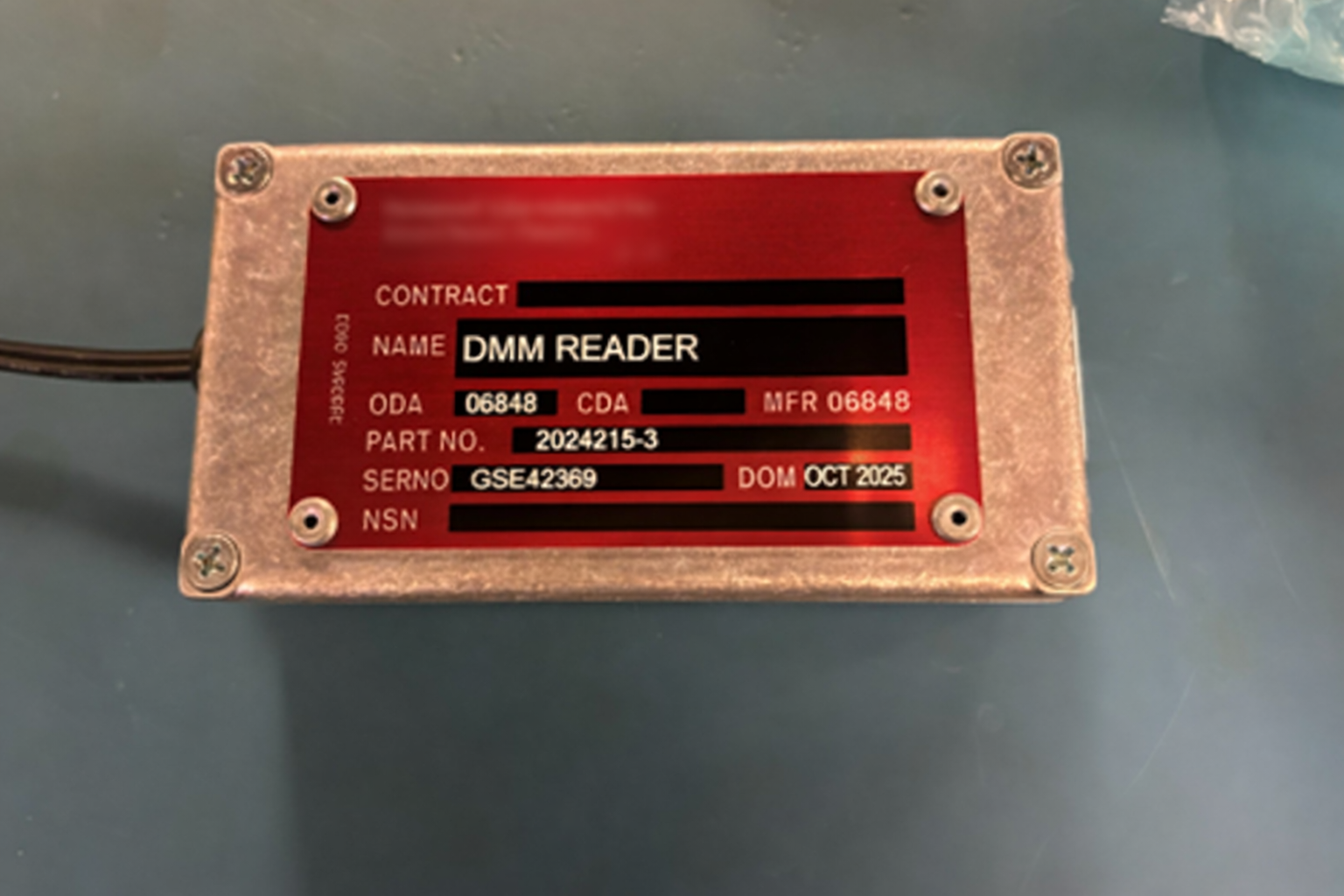
Each finished assembly carries a traceability label that ties the physical cable back to its manufacturing record, ATP result, and sign-off inspection. In aerospace, traceability is not optional. It is the difference between a maintainable asset and a liability.
Cables are the physical interface between a diagnostic workstation and the hardware it monitors, the last link in a chain of engineered components. If that link fails, the chain fails. Ball Systems understands this because the company builds both ends of the chain. The engineers who build custom PXI consoles for aerospace programs are the same engineers who review the drawings for a DMM cable and make sure the connector selection, wire specification, and routing will hold up in the field.
This DMM-PC interface cable program demonstrates that philosophy applied at the component level: bring the same discipline to a cable harness that you would bring to a rack-mounted automated test system. Source to spec. Build without deviation. Document everything. Inspect and release only what passes.
Every build-to-print engagement at Ball Systems runs through the same proven workflow that has delivered test systems and assemblies to aerospace primes, automotive OEMs, and defense contractors for six decades.
Ball Systems conducts a thorough review of all documentation, drawings, and bills of materials before quoting. Deep and expansive supplier relationships allow for optimized pricing, delivery, and obsolescence management. The goal is a no-surprises quote that reflects the actual scope of the work.
A dedicated project engineer serves as a single point of contact throughout the engagement. A fully integrated MRP system manages all production workflows, and a weekly planning cycle ensures flexibility. Frequent customer communication minimizes surprises and keeps projects on track.
Seasoned production technicians bring diverse skill sets to address build complexities. On-site engineers are available for technical issue resolution. A flexible process permits changes with minimal schedule impact, and rigorous application of build standards ensures consistent replication quality from unit to unit.
Ball Systems operates under an ISO-certified quality culture that ensures controlled processes and continuous improvement. All build-to-print subsystems and final assemblies receive thorough inspection and testing. Technicians are regularly trained and certified, and quality metrics and postmortem analysis drive ongoing improvement.
Ball Systems maintains CMMC compliance for DoD programs. Customer-furnished technical data is handled as controlled information, with access and transmission governed by the company’s information security program.
Ball Systems manages international shipping with expertise built over decades. In-house ISPM-15 compliant crating and packing ensure secure shipments. On-site installation support is available worldwide, and the team coordinates with customer freight forwarders as needed.
For international shipments involving ITAR-controlled hardware, Ball Systems ensures proper export authorization is in place before release. No controlled hardware or data is shipped to foreign destinations without confirmation that applicable requirements have been met.
Ball Systems is ITAR-registered and CMMC-compliant, and has been building for defense primes and government programs for six decades. Compliance is not a separate workstream here—it is part of how programs are run. Customer data is protected, controlled hardware is handled correctly, and documentation trails are complete from purchase order to final delivery.
Ball Systems builds to print with full documentation and traceable inspection records for every assembly. Whether you need a single cable harness or a turnkey automated test system, the same execution-first discipline applies.

Ball Systems creates, develops, and delivers custom test systems and produces comprehensive build-to-print systems for companies that craft or manufacture critical electronic or electromechanical components for aerospace and defense, automotive, and consumer appliance applications.