
A cast-house floor isn't a friendly place for electronics. Ambient temperatures hover around 120°F, the air is thick, and the line never really stops. But that's exactly where our customer needed a measurement system to live — close enough to the pour to catch thickness variation in real time, rugged enough to keep working shift after shift.
So we built one.
Cast lines run hot, fast, and on tight tolerances. Material thickness has to stay inside spec as it feeds through the casting process, and the only way to keep it there is to give the operator running the pour real, current data — not a sample pulled an hour later in a QC lab.
The customer needed live thickness readings at multiple points along the line, time-stamped and accurate, with the data accessible from anywhere in the plant. They also needed the hardware to survive the environment it was sitting in.
|
|
|
|
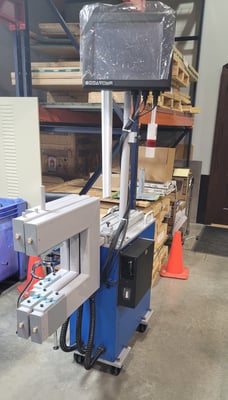
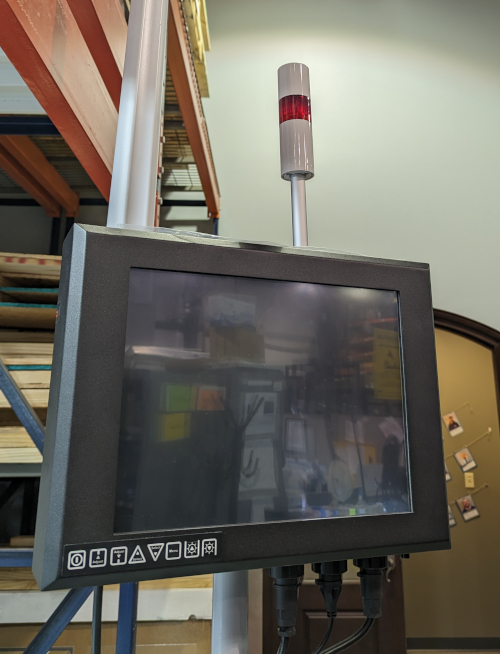
Our engineering team designed a custom thickness measurement system around the Keyence LK-H157 laser displacement sensor — a high-precision sensor we've worked with extensively. Lasers are positioned at key points along the casting process to measure material thickness as it moves through. Every reading is time-stamped and pushed back to the harvest operator, who uses the data to adjust pour rates on the fly and hold the line within spec.
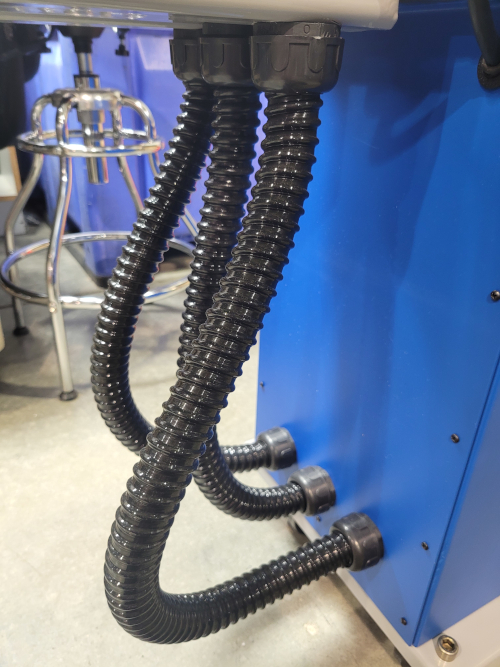
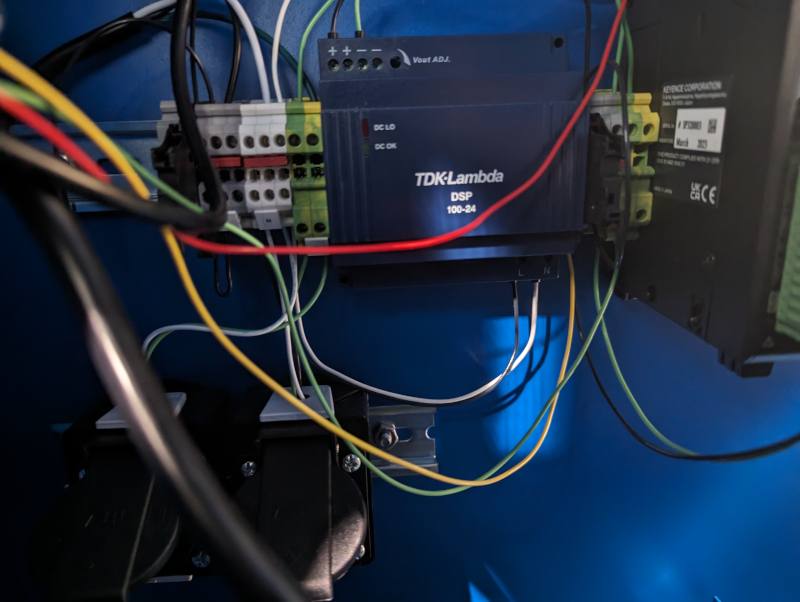
The enclosure is fan-cooled and built specifically for cast-house duty — sealed against the environment, vented to maintain safe operating temperatures for the electronics, and laid out so anyone on the floor can work on it without pulling the cabinet apart.
For our customer, this changes what quality control looks like. Instead of catching out-of-spec material downstream and scrapping it, they're correcting the pour as it happens. The data lives on the network, so engineers and quality leads don't have to stand at the line to know how it's running — they can pull it up from anywhere.
That's the kind of work we tend to take on: a real problem, in a real environment, that needs a system built for the way the customer actually operates. The lasers and the software are visible. The careful spec'ing of the sensor, the thermal design of the enclosure, the integration that lets the data flow back to the operator without a hiccup - that part is mostly invisible.

Ball Systems creates, develops, and delivers custom test systems and produces comprehensive build-to-print systems for companies that craft or manufacture critical electronic or electromechanical components for aerospace and defense, automotive, and consumer appliance applications.