
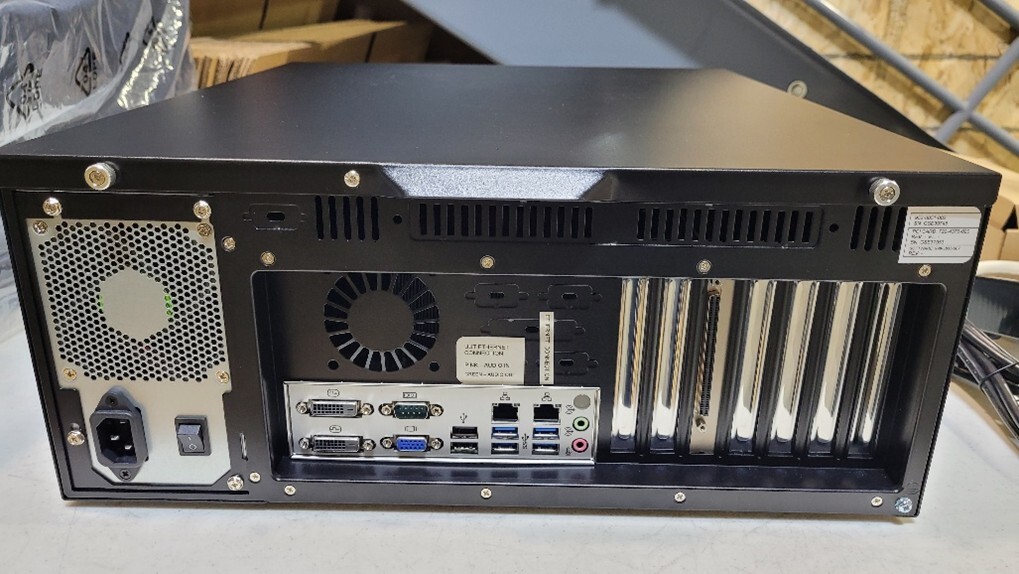
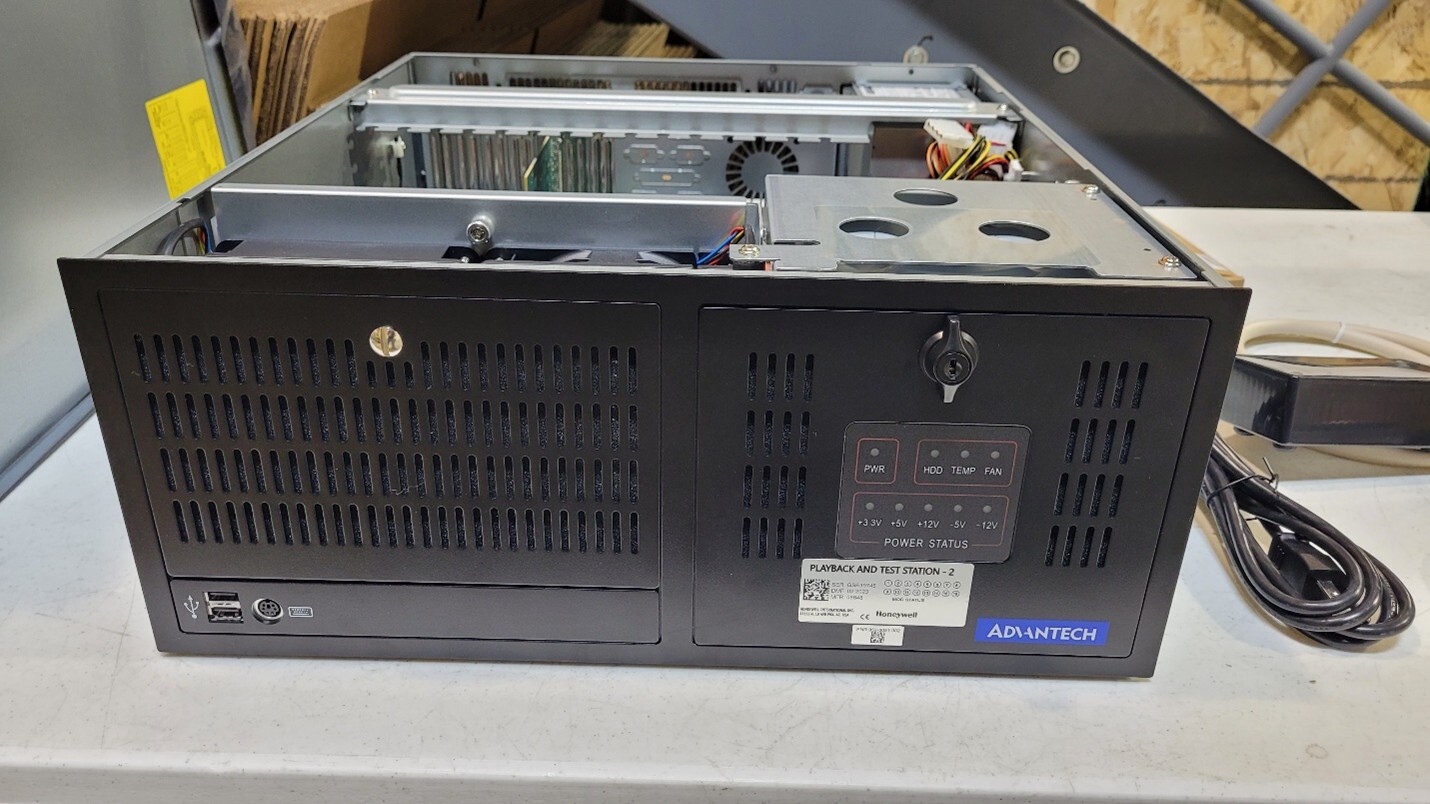
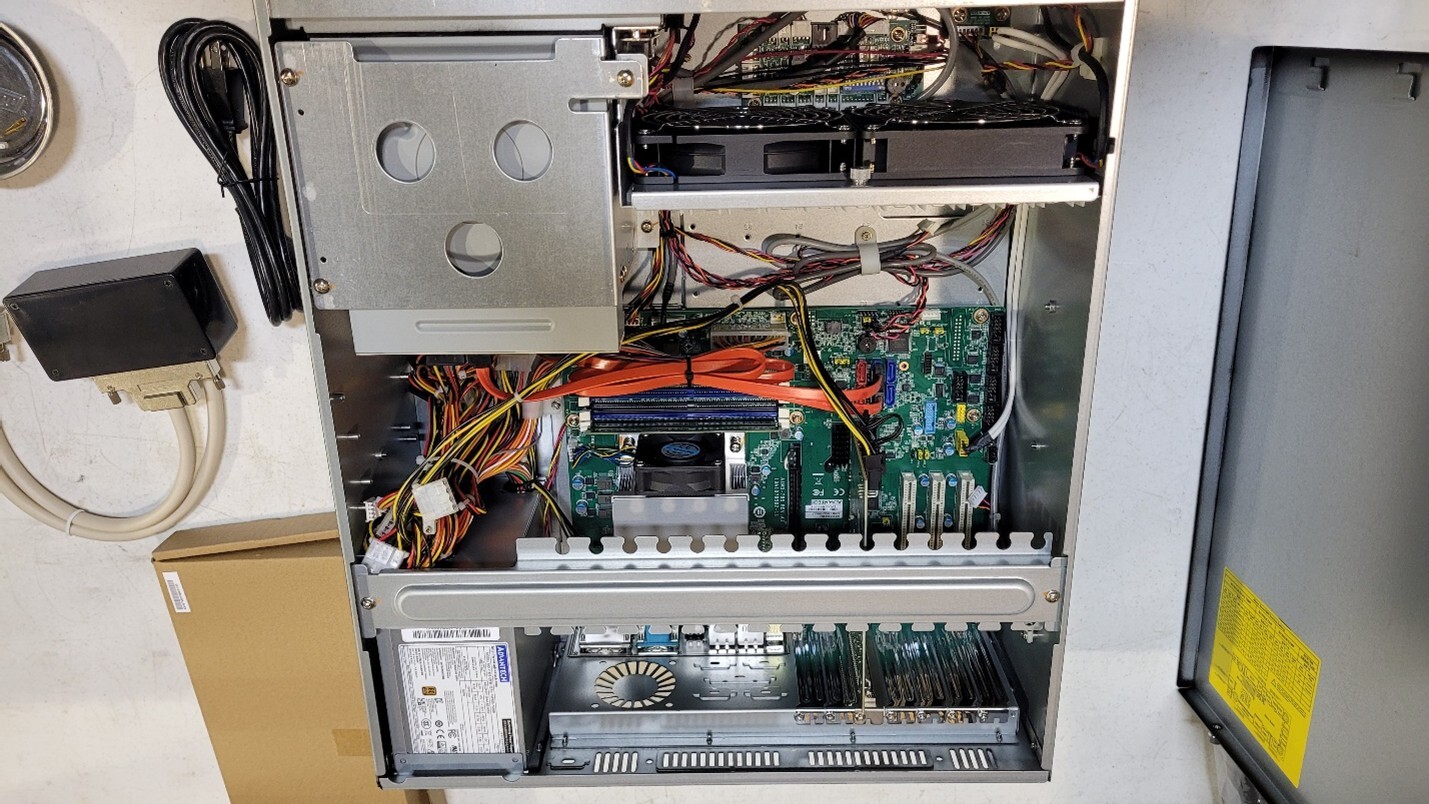
When a major aerospace and defense OEM needed a rugged, portable test station to put fast, automated diagnostics into the hands of flight line technicians, they brought the program to Ball Systems. The result is a self-contained ground support equipment (GSE) platform that combines a hardened test interface, an integrated PC running the customer’s proprietary diagnostic software, and the cabling and signal conditioning required to talk to an aircraft’s avionics and electrical systems — all in a form factor a technician can carry to the aircraft instead of pulling components back to the bench.
Traditional avionics troubleshooting often means removing line replaceable units (LRUs) from the aircraft and bringing them back to a depot test set. That works, but it is slow, it generates paperwork, and it ties up airframes that should be flying. A portable automated test station inverts the model: the test equipment comes to the aircraft.
With the station connected to the aircraft, a technician can run automated functional checks, isolate faults to a specific LRU or wiring path, and step through guided troubleshooting procedures — all without removing components. Maintenance time drops. Diagnostic accuracy improves. And the maintenance record produced by the station gives the operator a clean, repeatable artifact for compliance and airworthiness documentation.
|
|
|
Each portable automated test station Ball Systems builds is configured to the customer’s engineering package, but the architectural pattern is consistent:
This program is a build-to-print engagement. The customer owns the architecture and the diagnostic software; Ball Systems owns the disciplined, repeatable manufacturing of the station itself.
That discipline is more than assembly. It includes BOM and revision control, qualified-vendor sourcing, controlled travelers for every serial-numbered unit, IPC/WHMA-A-620 workmanship on every internal harness, mechanical inspection against the customer’s drawing package, and a full acceptance test procedure (ATP) executed in our lab before any station ships. The customer receives a unit that has already been proven.
Ground support equipment for avionics and electrical systems sits at an interesting intersection of priorities. It has to be durable enough to survive the field, but precise enough to be trusted with airworthiness decisions. It has to be automated enough to remove operator-induced error, but flexible enough to support the troubleshooting flows the maintenance organization actually uses. Finally, it has to be supportable for the long lifecycle of the platforms it serves, as they often outlast the test equipment originally fielded with them.
Building a station that satisfies all of those requirements simultaneously is the work. It is why programs like this are not commodity manufacturing engagements and why the customers who run them tend to consolidate the work with a small number of trusted build-to-print partners.
See Our Aerospace and Defense Capabilities>
If your team is building, sustaining, or replacing portable test equipment for avionics, propulsion, or aircraft electrical systems, Ball Systems can help. We have spent decades building exactly this kind of hardware for some of the most demanding programs in aerospace and defense, and we treat every build-to-print engagement as a long-term relationship.

Ball Systems creates, develops, and delivers custom test systems and produces comprehensive build-to-print systems for companies that craft or manufacture critical electronic or electromechanical components for aerospace and defense, automotive, and consumer appliance applications.