

Every test system project starts the same way: a customer has a need, a deadline, and a design that’s somewhere between “finished” and “mostly there.” What happens next determines whether that project ships on time and on budget or turns into a string of change orders nobody saw coming.
At Ball Systems, we’ve built pretty much every kind of bespoke electrical and electronic test system for aerospace and defense programs one can imagine, including PCAs, test sets, test cabinets, fixtures, National Instruments-based test stands, and the cables and harnesses that tie it all together.
In that time, we’ve learned the projects that go smoothly and the ones that don’t are separated by one key factor: what we know before we ever pick up a tool.
Here’s a rundown of what we actually need before a build-to-print test system project can move from quote to floor to shipped.
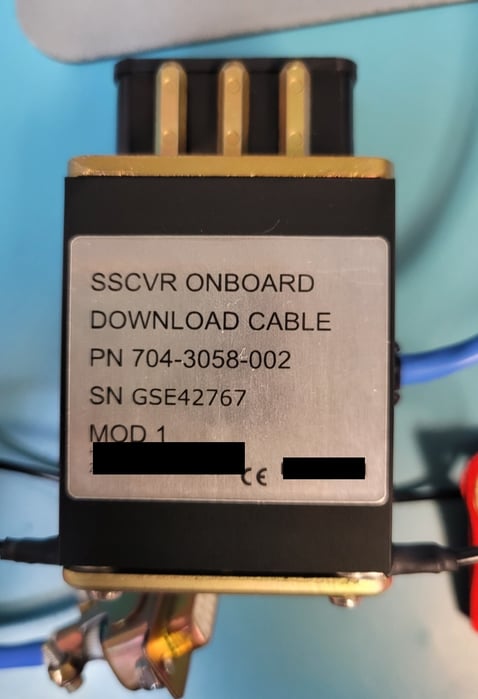
Ball Systems is in the build-to-print business. That means we’re not about taking a napkin sketch and designing a product around it. Rather, we want your design to be as complete as humanly possible to execute it precisely, at whatever volume you need, from a single prototype to hundreds of assemblies a year.
In the ideal scenario, the customer has already spec’d the equipment: the schematics are done, the parts are chosen, and the bill of materials reflects what’s going to be built. We’ll almost always find adjustments along the way, which is totally normal, but the foundation has to be there.
A design that’s still conceptual, as in a picture and a few words on a page, isn’t something we can quote with any confidence. If your design is partway there, tell us where the gaps are. We’ll tell you, honestly, whether it’s something we can help close or something that needs more engineering work before it’s ready for build-to-print.
The single most important document in any quote isn’t the drawing (close though). It’s the bill of materials. We request, and often require, a detailed and accurate BOM before we’ll price a project, because that’s where the real risk in a test system build lives, actually.
Every component on that list gets priced individually, and its lead time gets checked. That’s how we catch the things that derail programs after award: a part that’s gone obsolete with no drop-in replacement, a connector on a 20-week lead time nobody flagged, low stock on something the design depends on. We surface that during quoting and not after you’ve already approved a budget and a delivery date.
It takes longer up front. It also means the price we quote and the date we commit to are the price and date you actually get.

Scope creep doesn’t usually start with someone trying to get something for free. It starts with ambiguity, which can be in the form of a requirement nobody wrote down, an acceptance criterion nobody defined, a “done” that means something different to the customer than it does to the build team.
A lot of engineers writing a statement of work for a custom test system are doing it for the first time, and they don’t always know everything that needs to be in there. That’s exactly why we ask the questions we ask before a project starts. We're not trying to slow down the process, but to define what passing looks like, what counts as a modification versus a scope change, and what the drop-dead ship date actually is, before both sides are staring at a deadline with different expectations of what “finished” means.
If a competing supplier isn’t asking you these questions, that’s worth noticing. It usually means one of two things: either your design is unusually complete, or you’re about to find out what’s missing the hard way.
Build-to-print only works if the print is buildable. In practice, almost nothing goes exactly according to the original drawing. An engineer specs a switch that’s since changed, a hole diameter that doesn’t quite fit the enclosure, hardware that’s a quarter-inch too short. None of that is a failure on anyone’s part — it’s just what happens when a design meets reality.
What matters is what happens next. Our technicians document every deviation and mark up the drawings with redlines, get customer approval before deviating from the print, and deliver those redlines back at the end of the project so your drawings can be updated to match exactly how the system was actually built. You shouldn’t have to choose between a system that works and documentation that’s accurate. You get both.
Test sets, test cabinets, fixtures, control panels, PCAs, cable and harness assemblies — these all carry signals, power, and data that the rest of the system depends on. A misread schematic or a termination that doesn’t meet IPC standards doesn’t just cause a minor error. On a test system bound for the flight line, it can mean a grounded aircraft or a stalled validation program.
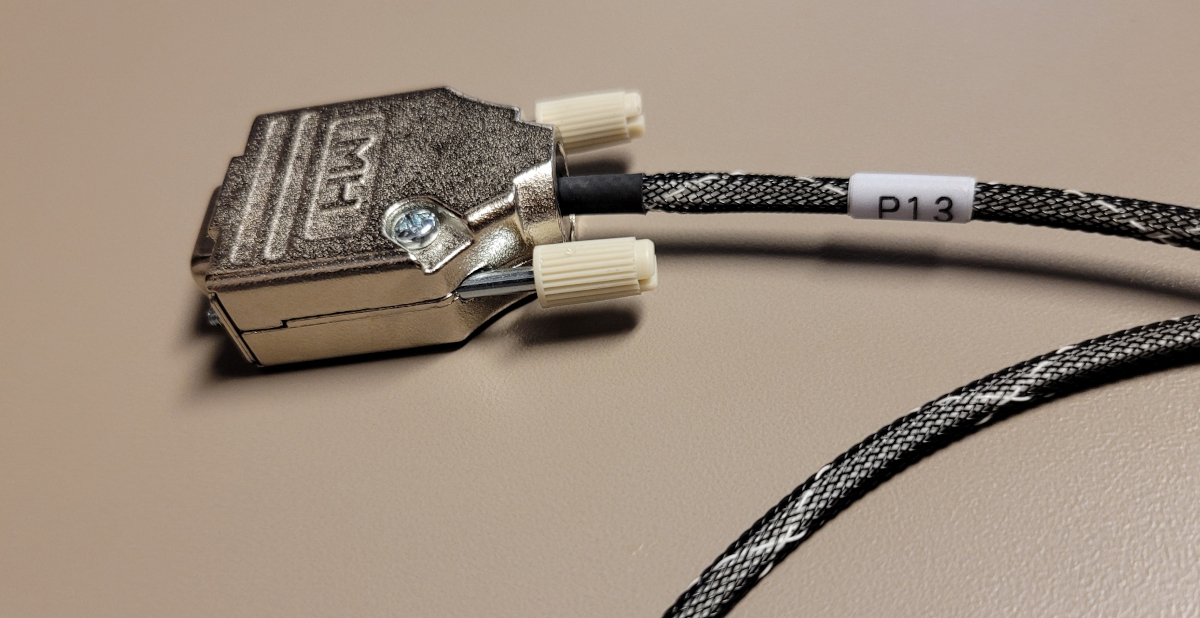
That’s why experience on the floor matters as much as experience in the quoting room. Our aerospace electrical assembly specialists are IPC-trained and have spent years on crimping, connector mounting, pin and socket work, and harness fabrication — the kind of hands-on experience that catches a termination that’s out of spec or a routing conflict buried in the print before it becomes rework or, worse, a field failure.
It also shows up on the systems side. A lot of the test stands we build are National Instruments-based — PXI chassis, cDAQ and cRIO hardware, LabVIEW and TestStand software — and that’s not incidental. Building to an NI platform correctly means understanding how the chassis, modules, and software are meant to work together, not just wiring what’s on the print. When a build-to-print drawing calls for an NI-based architecture, having assembly specialists who’ve actually built and integrated that hardware before is the difference between a test stand that works on day one and one that needs a redesign after delivery.
What Does Build-to-Print Mean for Aerospace and Defense?
Sometimes a test system order isn’t a six-month program. Instead, it’s an aircraft on the ground, and a customer who needs equipment quoted and out the door as fast as humanly possible. Sometimes it’s a multi-year defense platform with documentation requirements stacked on top of the build itself. Either way, what a customer needs from us is the same: a single point of contact who knows the project, answers questions instead of passing them down the line, and tells you the truth about scope, cost, and timeline before you’re committed to all three.
If you’re preparing to bring a test system project to any build-to-print partner — not just Ball Systems — here’s the short version of what to have ready:
Our aerospace electrical assembly specialists are ready to look at your design, your BOM, and your platform requirements — NI-based or otherwise — and tell you honestly what’s ready and what isn’t. If it’s ready now, we’re ready to quote it.
Ball Systems creates, develops, and delivers custom test systems and produces comprehensive build-to-print systems for companies that craft or manufacture critical electronic or electromechanical components for aerospace and defense, automotive, and consumer appliance applications.




Blog Comments