

Aerospace OEMs are under more pressure than ever. Tighter timelines, deeper scrutiny of suppliers, obsolete components that disappear without warning, and engineering teams already running at capacity can lead to big problems.
Unfortunately, one side effect of this pressure is the work that suffers: the test cabinet, the load box, the wire harness, or the printed circuit assembly, or rather, all of the parts of the system that are mission-critical in environments where failure is not an option.
That’s the work aerospace manufacturing build to print exists to absorb. For most OEMs, outsourcing it to a disciplined, US-based partner isn’t a nice-to-have. It’s the difference between hitting a program milestone and watching it slip away.
Build-to-print is straightforward in concept: the customer brings the drawing package and bill of materials, and the manufacturer builds exactly what’s specified. The design is locked.
In aerospace, that execution is anything but simple. A drawing package might call for a control panel assembly, a rack-mounted test system, a custom wiring harness, or a printed circuit assembly destined for flight hardware support equipment. The tolerances are tight. The traceability requirements are non-negotiable. The parts list is often a moving target with the potential for obsolete components, long-lead items, counterfeit-prevention requirements, and ITAR-controlled materials.
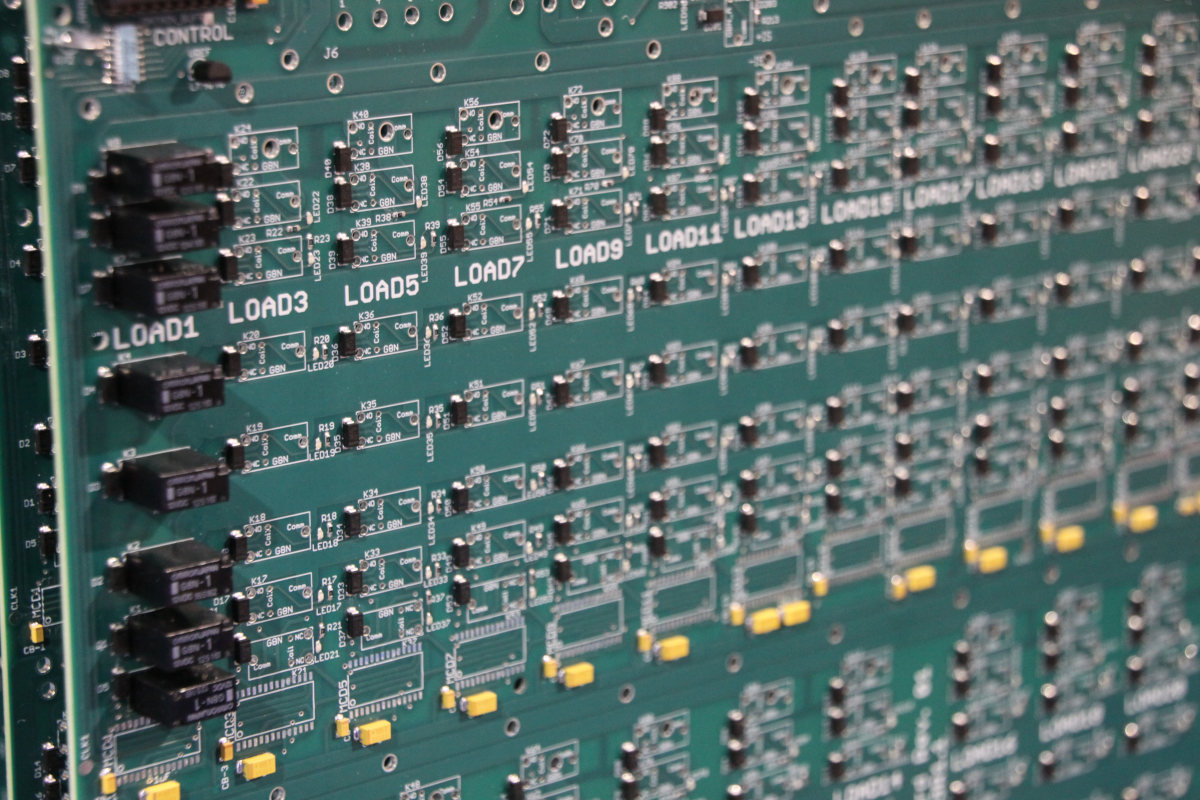
A build-to-print partner worth working with doesn’t just read the drawing and start cutting metal. They price out every component before the project is awarded, flag what’s obsolete or on long lead, identify drawing conflicts, and surface issues while there’s still time to solve them. That upfront rigor is what separates a manufacturing-ready test system from a prototype that pretends to be one.
1. Capacity without compromise.
Aerospace engineering teams are expensive, specialized, and almost always understaffed for the work in front of them. Asking them to spend cycles building cable harnesses, populating circuit boards, or assembling test cabinets is a misfire. Outsourcing build-to-print extends the team’s capacity without adding headcount, freeing senior engineers to focus on design, qualification, and the work only they can do.
2. Obsolescence and supply chain risk, handled.
Long-lifecycle aerospace programs are notorious for outliving their components. A connector that was easy to source in 2010 may have a 40-week lead time today — or be gone entirely. A build-to-print partner with an established supplier network and counterfeit-prevention procedures can resolve those issues before they become program delays. That’s especially critical for legacy test rig modernization, where the original BOM is half-obsolete by definition.
3. Compliance that’s already in place.
Aerospace and defense work brings a compliance stack most contract manufacturers can’t support: ITAR registration, CMMC Level 1 compliance, ISO 9001 certification, Joint Certification Program registration for US/Canada, counterfeit-part prevention, and RoHS capability. Standing those programs up internally or qualifying a new supplier from scratch costs months. The right outsourcing partner brings them on day one.
4. Low-volume, high-mix without the premium.
Most contract manufacturers are built for volume. Aerospace rarely is. A typical build-to-print program might be a quantity of one, or a few dozen, or a few hundred units over a long lifecycle. That mix breaks the economics of a high-volume EMS provider but fits a build-to-print specialist precisely. Low-volume, high-mix manufacturing is what they’re tooled for, staffed for, and priced for.
5. A single point of accountability.
Aerospace programs already have enough vendors. Layering in three or four more, including one for cable harnesses, one for PCBAs, and one for cabinet integration, multiplies the coordination burden and the failure modes. A build-to-print partner that can deliver mechanical, electrical, software, and system integration under one roof simplifies the supplier list and the accountability when something needs to be resolved.
There’s a notion to treat build-to-print as a transactional service: send the drawings, get the parts, move on. In commercial electronics, that logic mostly stands up. In aerospace, it can fall apart fast.
Drawing packages are rarely complete. A mechanical engineer specs a hole diameter that doesn’t match the switch, or calls out a fastener that’s too short, or pins a connector to a footprint that won’t physically route. These issues are invisible on paper and obvious on the bench. A disciplined build-to-print manufacturer catches them, documents them with red lines, gets customer approval, and delivers updated drawings back to engineering so the next build doesn’t repeat the same mistake.
That kind of partnership is what protects the program schedule. It’s also what distinguishes a build-to-print supplier from a contract assembler. The supplier doesn’t just build what’s drawn up; they build what was meant to be drawn, and they make sure the documentation catches up to reality.

Not every contract manufacturer is qualified to support aerospace work, and not every aerospace-qualified shop is built for the low-volume, high-mix programs that dominate the industry. When evaluating a build-to-print partner, the criteria that matter most are also the ones that show up earliest in the engagement.
For aerospace OEMs evaluating whether to keep build-to-print work in-house, hand it to a high-volume EMS provider, or partner with a specialist, the question isn’t really about cost per assembly. It's about which option protects the program, and which one creates a new risk to manage.

Ball Systems creates, develops, and delivers custom test systems and produces comprehensive build-to-print systems for companies that craft or manufacture critical electronic or electromechanical components for aerospace and defense, automotive, and consumer appliance applications.



Blog Comments