

Browse Ball Systems’ project gallery long enough, and a pattern starts to emerge.
Aerospace battery pack functional testers. Hybrid engine control module test stations. 256-pin custom cable harnesses. Pneumatically actuated probe blocks for high-current automotive ECUs. A centrifuge sound chamber. A wireless ballistics range instrument tester. A custom control box for a medical research lab.
These are not variations of a standard, mass-produced product. Every single project was built precisely to a customer’s drawing package to solve a problem that no catalog item could solve.
In each case, the stakes for getting it wrong were real: delayed production launches, failed qualification tests, wasted prototype hardware, or components that shipped without adequate validation.
That is what bespoke test equipment means in practice.
Sure, there are a million USB-C lightning cables out there. But the build-to-print space is far more complex. All too often, engineers miss something key: the cable, the interface adapter, and the fixture are often where projects live or die. A full-rack test system with a flawed interface harness is a full-rack test system that won’t work. The sophistication of the surrounding platform doesn’t compensate for an imprecise connection point.
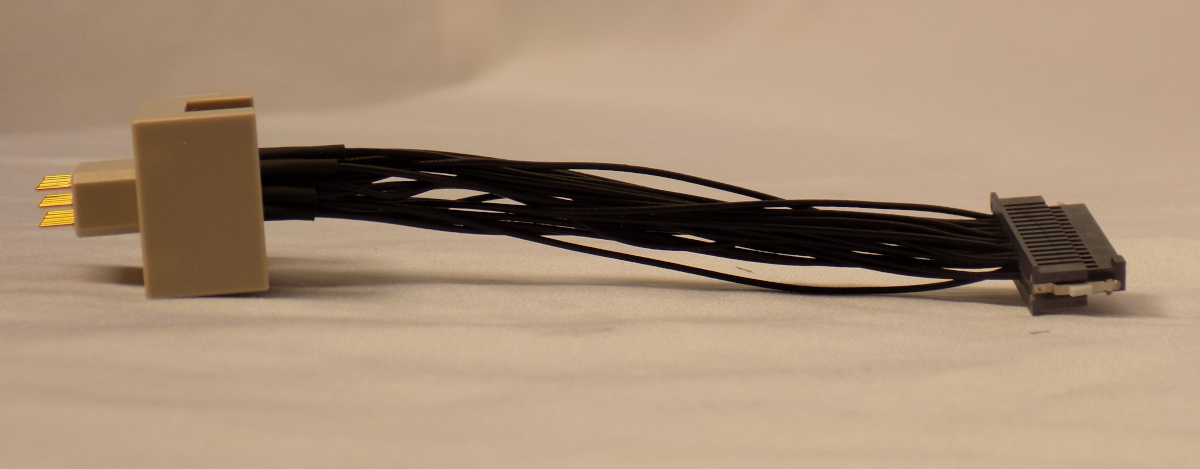
Examples:
None of these is interchangeable. They were built once, for one application. Every one of them could have stopped a program cold if it had been built without a focus on precision.

The instinct to avoid a custom build is understandable. It takes longer to spec, can cost more upfront, and almost always requires a partner who can execute on a drawing package rather than pulling something from a catalog.
The problem is that in high-stakes manufacturing environments, there is rarely a catalog option that meets the actual need. The device under test has a unique connector. The signal envelope is outside what a commercial fixture can accommodate. The test sequence requires custom firmware or an FPGA that doesn’t ship in a box.
The alternative many engineers reach for is building it in-house. This is rarely a good way to go. With this route, engineering teams are under scheduling pressure, working with whatever tools are available, and producing assemblies that may look functional but lack the IPC-standard terminations, verified pin seating, and documented build packages that prevent intermittent failures in production. In the end, it will cost you more money and time to rework
The same dynamic plays out at the system level. A test box assembled from available components by an engineering team under deadline pressure is not a production-ready test system. It’s a prototype. Deploying a prototype into a manufacturing line or a defense program carries a different category of risk than most engineers want to own.
The value isn’t just in what gets built. It’s in what gets caught.
Electrical test systems share a common technical language regardless of industry. Physics of signal integrity, power delivery, interface reliability, and measurement accuracy don’t change between a hybrid ECU tester for an automotive OEM and a ground support unit for a commercial aviation program. What changes are the application envelope, the qualification requirements, and the connector.
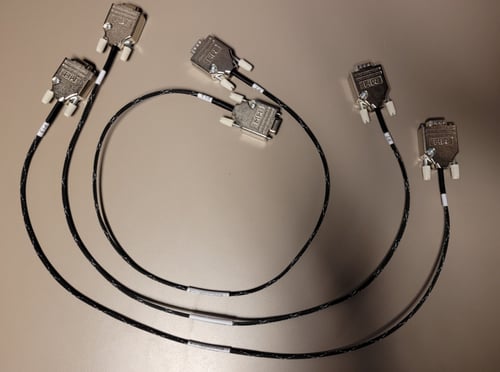
A truly bespoke test system doesn’t start with a platform and add adapters until it fits. It doesn’t start with available hardware and constrain the test coverage to match.
That philosophy shows consistently across Ball Systems’ project history:
In each case, the custom nature of the system isn’t the point of pride. It’s a necessary condition for the system to work. The goal was never to build something custom. The goal was to build something that solved the problem.
For engineers and program managers evaluating whether to invest in properly built custom test equipment, the real comparison isn’t against a catalog option. It’s against the cost of what happens when test equipment fails to perform.
In a production environment, a test station that delivers false passes ships bad product. A test station that delivers false failures stops a production line and generates rework that doesn’t need to happen. Either failure mode is expensive. In aerospace and defense, either failure mode can have consequences that extend well beyond cost.
In a validation or qualification environment, a test system that can’t accurately characterize the device under test extends program timelines, delays design freeze, and in the worst cases, causes programs to invest in a product iteration that a better test system would have flagged as deficient earlier.
The ROI calculation on properly built bespoke test equipment isn’t complicated. It’s the cost of getting it built right, against the cost of what fails when it isn’t.
The Ball Systems project gallery is not a marketing asset in the conventional sense. It’s a record of problems that needed a solution that didn’t exist yet and of a team that built it anyway.
The range matters, and not because broad industry coverage is a selling point in itself. Rather, it's the accumulated experience of building custom electrical systems across every one of those environments that is exactly what you want on your side when your application is the one that doesn’t fit the catalog.
Ball Systems Technologies designs, develops, and delivers custom test systems and build-to-print assemblies for aerospace and defense, automotive, and commercial industrial customers. With 60 years of manufacturing experience and an ISO 9001-certified facility in Westfield, Indiana, Ball Systems is the build partner for programs where off-the-shelf isn’t an option.

Ball Systems creates, develops, and delivers custom test systems and produces comprehensive build-to-print systems for companies that craft or manufacture critical electronic or electromechanical components for aerospace and defense, automotive, and consumer appliance applications.





Blog Comments