

Much like Elvis at one point, the term “PXI” is everywhere in aerospace and defense test. It shows up in program specs, drawing packages, and procure conversations as if everyone already knows what it is and why it’s there. Most engineers do. But if you’re newer to the test world — or you’re explaining a program to someone who isn’t — it helps to start from the ground up.
Here’s what PXI actually is, why aerospace and defense programs rely on it, and where a build-to-print assembly specialist like Ball Systems fits into the picture.
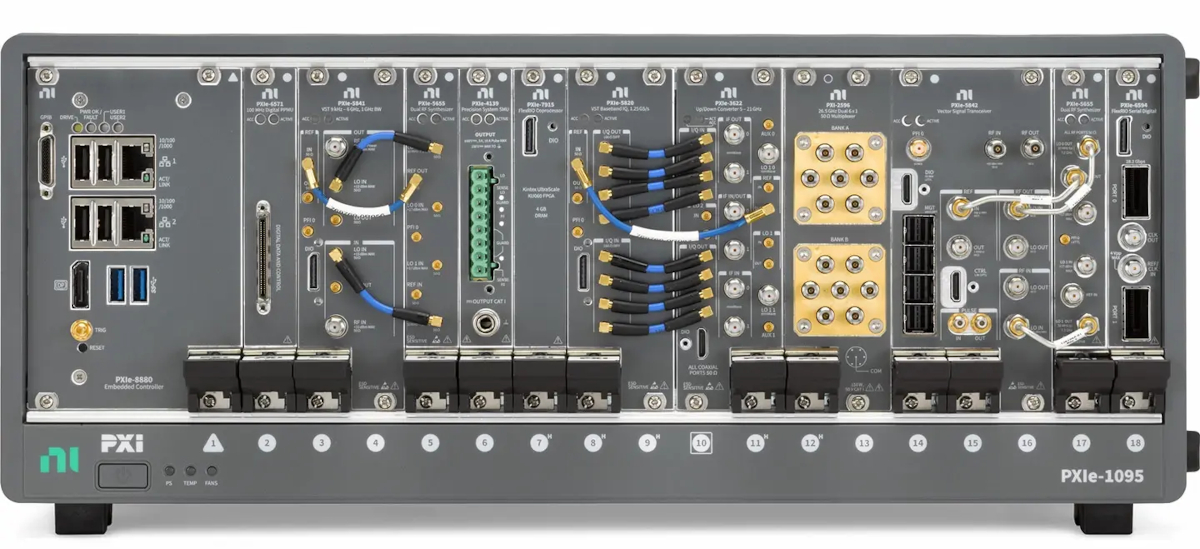
PXI is a rugged, PC-based platform for measurement and automation systems. It combines PCI electrical-bus features with modular, Eurocard packaging and adds specialized synchronization buses and key software features — making it a high-performance, cost-effective deployment platform for applications like manufacturing test, military and aerospace, and industrial test.
PXI systems are composed of three main hardware components: a chassis, a controller, and peripheral modules. The hardware is driven by software — often LabVIEW, C/C++, .NET, or Python — organized by test management software such as NI TestStand.
National Instruments (NI) offers more than 600 PXI modules ranging from DC to mmWave, including standard instruments such as oscilloscopes, digital multimeters, and data acquisition modules, as well as interfaces including GPIB, serial, and CAN. Because PXI is an open industry standard, nearly 1,500 products are available from more than 70 different instrumentation vendors.
That open ecosystem is a big part of why PXI became the dominant platform in aerospace test. Engineers aren’t locked into a single vendor’s product roadmap — they can mix and match instrumentation from across a broad supplier base while running everything under one software architecture.
NI has served the aerospace and defense industry for decades with PXI-based instrumentation and application software that reduces the overall cost and risk associated with the design, validation, test, and support of mission-critical programs.
That combination of reduced cost, reduced risk, and long-term supportability is exactly what program managers in defense need. Test systems in aerospace don’t get retired when the product ships. They often have to remain operational for the entire service life of the platform, which can span decades.
Aerospace and defense organizations are being asked to learn and integrate new technologies, manage new and often unbudgeted corporate or government mandates, and maintain legacy test equipment for years longer than originally planned. PXI’s modular architecture addresses this directly: when a module goes end-of-life or a new test requirement emerges, you swap or add a module rather than replacing the entire system.
The platform has proven itself on the most demanding programs in the industry. Lockheed Martin used NI hardware and software to develop the LM-STAR approach to standardized test systems, yielding significant cost-saving benefits. Moog India Technology Center used NI PXI and real-time controllers to build a fast, flexible, and maintainable software test platform for flight actuation systems — testing multiple actuation systems in parallel while reducing costs and saving floor space.
Inside an aerospace PXI-based test system, you’ll typically find a multi-slot chassis housing a mix of modules — DMMs, matrix switches, signal conditioners, digital I/O, power supplies, and protocol interfaces for avionics buses like MIL-STD-1553 or ARINC 429. An embedded or remote controller runs the test software, executing test sequences, acquiring data, and reporting results.
Communication buses in aircraft, satellites, launch vehicles, and weapon systems are becoming faster and more complex — and PXI’s modular architecture lets test engineers keep pace with these changes without having to rebuild from scratch.
The software side matters just as much as the hardware. The NI PXI platform works with the languages and tools you already use — Python, C/C++, C# — while integrating with NI software such as InstrumentStudio, LabVIEW, and TestStand to accelerate automation.
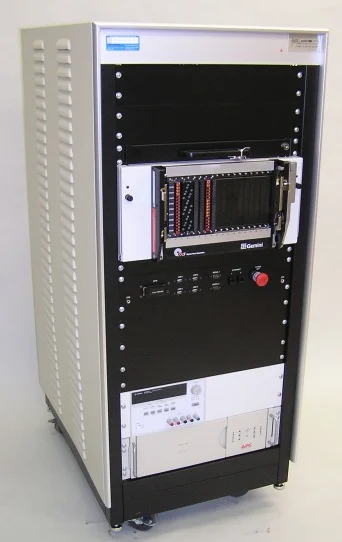
Here’s something NI’s documentation won’t tell you: the PXI chassis and modules are only part of what makes a fielded aerospace test system work.
The physical system that houses those modules — the control panel, the custom wiring harnesses that route signals between the chassis and the unit under test, the interface boards, the enclosure that meets the program’s environmental and EMI requirements — that’s where Ball Systems’ assembly specialists come in.
Ball Systems has built NI-based test systems across aerospace and defense programs for customers including Boeing, Honeywell, L3Harris, and Collins Aerospace. Our IPC-certified technicians build the hardware that goes around the NI platform: custom PXI test console assemblies, product interface boxes for aerospace PXI test systems, and the control panels and harnesses that turn a set of NI modules into a fielded, production-ready test system.
NI provides the platform. Ball Systems can build your system around it.
If your program is specifying a PXI-based test system and you need a build-to-print assembly specialist to turn that design into hardware, the conversation starts with your drawing package.

Ball Systems creates, develops, and delivers custom test systems and produces comprehensive build-to-print systems for companies that craft or manufacture critical electronic or electromechanical components for aerospace and defense, automotive, and consumer appliance applications.



Blog Comments